
Is La Manga extremely busy in August
Yes. August is peak season in La Manga, and it can feel extremely busy. I am not writing this as a brochure. It is more the day-to-day view of what it’s like when the peninsula is full.
“Busy” here is not just more people on the beach. It usually means heavier traffic along the strip, slower roundabouts, and longer waits to get anywhere by car. It can mean circling for parking, especially near popular beach access points and shopping areas, and more noise late into the night. It also varies a lot by where you stay and the time of day – some stretches feel intense, others stay manageable if you plan around early mornings and late evenings.
August in La Manga: why it is the peak month
This is when La Manga flips from quiet to full-on summer, and the whole strip feels it at once.
La Manga changes sharply between off season and summer. In the cooler months it can feel almost sleepy, with plenty of space and a slower pace. In summer it tightens up fast because it is a long, narrow strip and most people are trying to do similar things in the same window of the day.
August is the most intense because it concentrates the highest number of visitors and second-home stays. A lot of apartments in La Manga that sit empty or lightly used for most of the year are suddenly occupied. That pushes up pressure on the basics – roads, supermarkets, beach entrances, and anywhere you need to park.
It is also not evenly spread across the month. Weekends are heavier, and holiday periods are heavier again. If you arrive or leave on a Saturday, or you need to drive out for an appointment, you tend to feel the difference immediately.
Weather drives people to the same places at the same times. When it is hot, most people aim for the beach in the late morning, then move to cafés, shade, or the rent apartment through the hottest hours, then head out again in the evening. That creates predictable pinch points on the main road, by the busiest beach access points, and around the small commercial areas.
My practical take: if your work or your nerves depend on things being quick and predictable, plan your driving and errands for early morning. In August, trying to “pop out” at midday often turns into a slow loop and a bit of frustration.
What “extremely busy” means in practice
Here’s what it looks like day to day, so you can picture the friction, not just the vibe.
In August, “busy” in La Manga is mostly about lots of people trying to do the same thing at the same time. Late morning through to evening is the main crunch. People head to the beach, then move for lunch, shade, supermarkets, and back out again later. The result is density, not just a nice atmosphere.
You feel it in small, practical ways. A simple errand takes longer. You wait to turn at roundabouts. You get stuck behind cars looking for a gap. You spend more time watching pedestrians at crossings because there are more of them.
The biggest change is less spontaneity. In quieter months you can decide to go out, park near where you want, and be on the beach quickly. In August you tend to plan around crowds rather than the other way round. That might mean going earlier, choosing a different access point, or deciding to stay put until things ease off.
It is also not just about numbers. It is about friction. La Manga is a narrow strip, so there are limited routes and limited places to leave a car. When those fill up, everything slows down together.
Practical advice: if you have work calls, kids’ routines, or you simply hate being delayed, treat late morning to early evening as “slow time” and schedule driving for early morning. My judgement call is simple: if you like to wing it, August will test your patience here.
Traffic: one main road changes everything
Because most movement funnels onto the same route, congestion in August shows up fast and spreads along the strip.
La Manga is long and narrow, with a limited road network. In practice that means most cars, buses, deliveries, and taxis rely on the same main road for north-south movement. There are side streets, but they mostly feed back onto the same points.
When traffic builds, short trips can take much longer than you expect. Not because the distance changes, but because you cannot easily bypass the slow bit. If the main road is backed up, you are usually in it.
The slowdowns tend to cluster around bottlenecks. Access points to popular beaches and commercial areas are a common one, especially where pedestrians are crossing and cars are turning in and out. Busy junctions can also stall flow because one small blockage affects everyone behind it.
The practical impact is simple. Errands take more planning. A quick supermarket run can become a drawn-out loop if you miss a parking space or you hit the wrong junction at the wrong time. Restaurant plans get harder too, because even if you book a table you still need to arrive, park, and walk in the heat. Day trips off La Manga can feel like work if you are trying to leave or return at the same times as everyone else.
What helps is treating driving like a timed task, not something you squeeze in between other things. Go early for essentials. If you can, stack errands in one run and avoid hopping up and down the strip. My judgement call: in August, I would not plan anything that depends on a tight schedule in the middle of the day unless you are happy to be late and not care.
Beaches in August: crowded stretches and quieter pockets
What the crowds feel like on the sand, and why some areas stack up faster than others
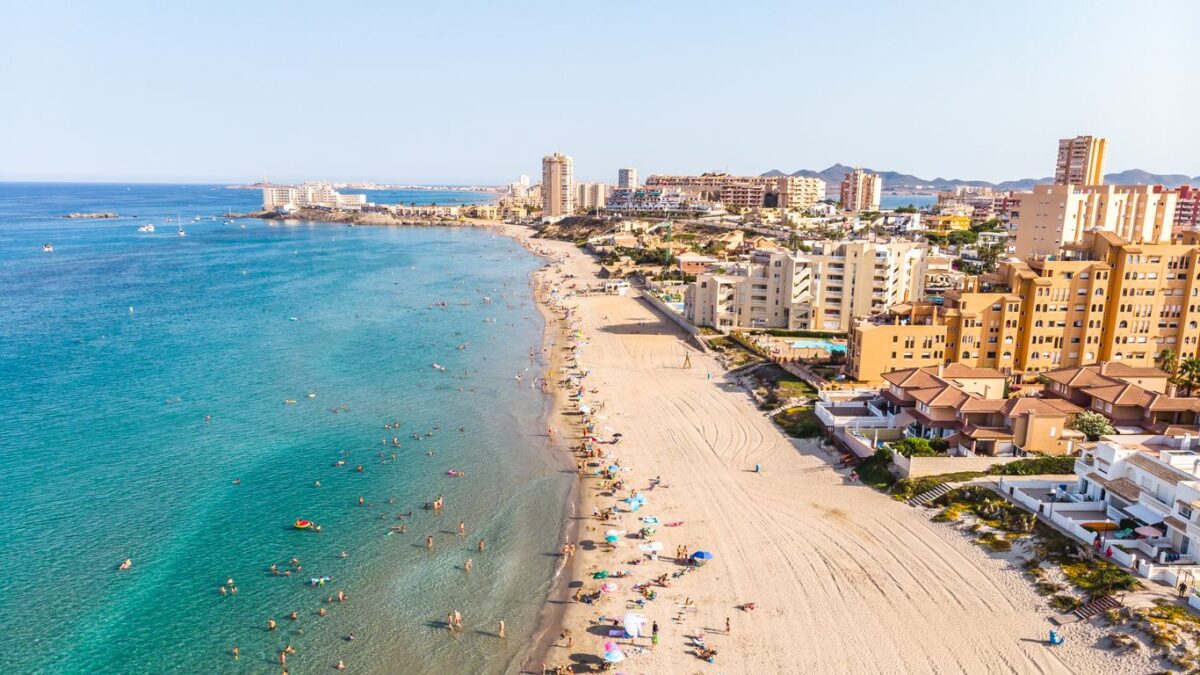
August is when you notice how many people can fit onto a narrow strip of coastline. On peak days the popular beaches fill up quickly. Not in a dramatic way. Just steadily, from mid-morning onwards, until the gaps are gone and you are making small decisions about where to put towels, bags, and shade.
The busiest parts feel busiest around midday and early afternoon. That is when people are arriving, settling in, and also getting up for drinks, toilets, ice creams, and lunch. It creates constant movement in a small space. Even if you are sitting still, it can feel busy because there is always someone walking past.
Not all beaches feel the same, even in the same week. It often comes down to three things: wind exposure, access, and facilities. A stretch that gets more wind can feel less comfortable, so it naturally draws fewer people on some days. Areas with easy access points and nearby bars, showers, or lifeguards tend to concentrate crowds because they are simple, predictable choices. If a place has limited access or a longer walk, it can feel calmer, but that can change quickly if the conditions are good.
Set your expectations with photos. Many of the calm, spacious beach shots you see were taken off season, early in the morning, or on a quieter day. In August you might not get the personal space you imagine, especially if you turn up late morning and expect to choose your spot.
Practical advice: go early if you care about space, and bring what you need so you are not constantly going back and forth. If you can shift your beach time to late afternoon into evening, it often feels more workable, both for heat and for crowds. My judgement call is simple: if you need quiet to relax, plan your beach time like an appointment, because turning up at midday and hoping for calm is usually a frustration.
Parking: the daily stress point
This is where August can trip you up, because your whole day starts revolving around where you can leave the car.
Parking can be the hardest part of August in La Manga. Not because it is impossible everywhere, but because it becomes a constant background task. You stop thinking “I’m going to the beach” and start thinking “where will I put the car, and how far will I have to carry things in the heat?”
In peak areas, searching takes time and patience. You do slow loops. You wait for someone to load up. You reverse out and try a different street. None of it is dramatic. It just grinds away at your morning, especially if you are doing it with hungry kids, wet towels, or a tight lunch booking.
If you rely on a car, the experience depends heavily on where you stay and whether you have allocated parking. Allocated parking means a reserved space with your accommodation, not a vague “there’s usually room outside”. If you have a space, you can park once and relax. If you do not, you may find yourself planning your day around the moment you manage to park, because giving up a good spot can mean not getting one back for a while.
What helps is simple and a bit dull. Walk when you can, even if it means choosing a closer beach or a nearer restaurant. And plan one outing rather than lots of small trips. Do your supermarket run, pharmacy, and any errands in one go, then park up and stay put for a few hours.
My judgement call: if you are coming in August and you will have a car, I would prioritise somewhere with proper allocated parking, even if the place itself is slightly less convenient on paper. It often saves more time and stress than any location advantage.
Noise and late nights: what to expect near busy zones
Sound levels and sleep quality change a lot depending on where you are and what is around you.
August is peak season, and that shows up in the soundscape. More people means more background noise. You hear voices in the stairwells and on balconies, extra traffic, scooters going past, and nightlife noise carrying further than you expect on warm nights.
It is not constant, and it is not the same everywhere. Some streets feel surprisingly calm once you are indoors. Others stay lively well into the night because people are still out eating, walking, or heading back from bars.
Noise varies a lot by building position and what is nearby. A flat facing the main road or a roundabout will hear more passing traffic. One above or next to restaurants can pick up chair scrapes, late conversations, and delivery runs. A place facing inward, higher up, or set back from the strip can feel completely different, even if it is only a minute away on foot.
If you are a light sleeper, your accommodation choice matters more in August than in other months. Off season, the same building can feel quiet because there are fewer neighbours and less evening movement. In August, you are sharing walls with more families, more visitors, and more late returns.
Practical checks help. Ask which side the bedroom faces. Ask if the windows are double glazed (two panes of glass with a gap that reduces noise). And if you can, prioritise a place that is not directly on a main road or above a busy ground-floor unit.
My judgement call: if you know broken sleep ruins your trip, do not gamble on “it will probably be fine”. In August, it is worth choosing a slightly less central spot if it buys you quieter nights.
Not all areas feel the same: where August feels most intense
Two places can be only a short drive apart, but feel like completely different La Manga in August.
August crowds are not evenly spread. Some zones feel packed because they pull people in. They have the cluster of shops, the main promenade feel, and beaches that are easy to access with big stretches of sand and facilities close by. Those are the areas where you notice the “holiday crush” most. More footfall. More queues. More background noise.
Other stretches feel calmer because they are more residential or simply less central. You still get summer life, of course. But it is often more about neighbours coming and going than crowds flowing through all day. The beach can feel less pressured, and the streets can feel quieter once you step away from the obvious hotspots.
Distance is deceptive here. A few kilometres can change the atmosphere a lot, especially if it changes what is nearby on foot. One area can have a constant stream of people walking to dinner and the beach. Another can feel like a long line of apartments where most people stay local and keep to their own block.
If you are booking, do not just look at a pin on a map. Check what is walkable from your accommodation. By “walkable” I mean what you would actually walk to in August heat, with beach stuff, without it feeling like a chore. Look for the nearest decent beach access, a small supermarket, and a couple of places you would genuinely eat at more than once.
My judgement call: if you want an easier August, pick somewhere where you can live your day-to-day on foot, but not directly on top of the busiest strip. That usually gives you options without feeling like you are in the middle of it every time you step outside.
What still works well in August: timing makes a big difference
You cannot make August quiet, but you can choose the parts of the day that feel more manageable
In August, La Manga has a strong daily rhythm. If you lean into it, you can still have a good stay without spending the whole day in traffic, queues, and heat.
Early mornings are the easiest window. Parking is usually simpler, beaches feel calmer, and the temperature is more forgiving. If you want a swim that does not feel like a full event, go early and keep it straightforward. Arrive, swim, leave, then do breakfast or a quick shop while it is still calm.
Midday is the hardest stretch for both crowds and heat. This is when the main road feels busiest, beach entrances are most pressured, and finding a space to park can become a slow loop. If you are trying to squeeze in errands, a beach visit, and a drive across the strip in the middle of the day, it tends to feel like work.
Late evenings are often better for walks and dinners. The light drops, the air softens, and the promenade atmosphere makes more sense. Just be aware that noise can rise in some areas, especially near restaurants, busy ground-floor units, and the main road. It is a nice time to be out, but not always a quiet time to be in.
The simplest way to cope is to plan around that rhythm. Pick one main activity per day and keep travel simple. One beach. One meal out. One errand run. Then build in a proper break during the hardest window, even if that just means shade, a book, and a slower pace back at the flat.
My judgement call: in August, trying to do “a bit of everything” in one day is what makes La Manga feel too busy. If you treat it as a place to do fewer things, at better times, it tends to work better.
Who August suits, and who should avoid it
Use your tolerance for crowds, noise, and day-to-day hassle to decide, not just the weather.
August can work if you expect crowds and you actually want a busy summer atmosphere. If you like full promenades, a lively feel in the evenings, and you do not mind planning around peak times, you can have a good week here.
It is usually not a good choice if crowds, noise, or parking stress you. In August, small frictions stack up. A simple beach visit can mean a slower drive, a longer walk from where you manage to park, and more background noise than you would choose at home.
For families and groups, there is a clear trade-off. August gives you convenience in one sense because everything is open and there is more choice day to day. But you pay for it in peak-time friction, especially if you need to move the car, coordinate meals, or keep small kids comfortable in the heat while you hunt for parking.
If your trip style is simple and local, August is easier. Stay in one area. Walk to the beach. Do one main plan per day. If your trip style involves lots of driving up and down the strip, hopping between beaches, or meeting friends in different zones, August is where La Manga starts to feel like hard work.
It is also worth knowing that the off season feels very different. Much quieter. More spacious. Less noise at night, easier parking, and a calmer pace overall. The trade-off then is that some places reduce hours or close, and the atmosphere is more residential than holiday.
My judgement call: if crowds stress you, August is not ideal, even if you pick a quieter block. If you still want summer warmth but would rather have breathing space, consider coming outside the August peak, or at least plan your days around early mornings and later evenings.
FAQ
Words from the locals
Living here and dealing directly with guests, we often see the same pattern in August: people underestimate how quickly the place fills up, then feel worn down by the constant pressure of it. A common problem is arriving mid-afternoon and only then realising parking has become a daily project.
If crowds stress you, August is not a great fit for La Manga, and I would only choose it if you can genuinely work around the peak times rather than hoping it will feel relaxed once you arrive.
You might like these too
These sit in the same category as the one you are reading. They follow the same thread and offer a bit more depth. Have a look if you want to go further.