
Can you walk most places in La Manga
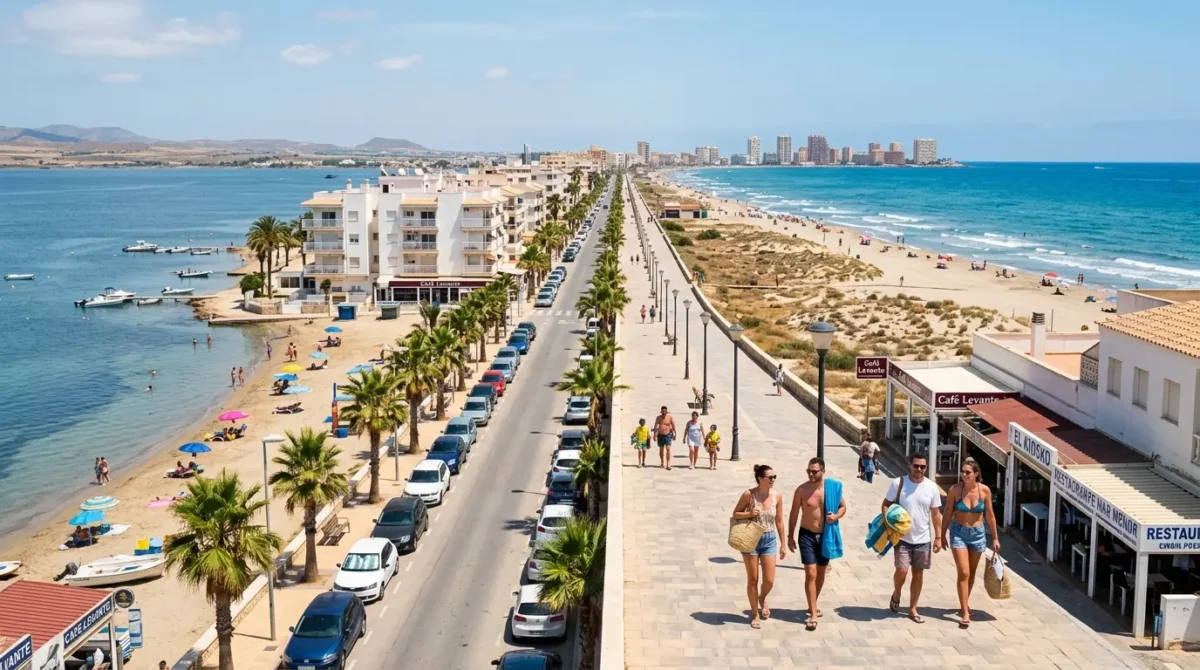
La Manga often looks easy to walk on a map because it is narrow and built in a long line between two seas. In daily life, though, it usually feels much longer than it looks. What seems close on a screen can turn into a fairly repetitive walk once you are actually out on the main strip, especially if you are carrying beach things or doing the same route every day. So the useful question is not really whether La Manga is walkable at all, but whether you can rely on walking for most trips, or only for some of them.
The honest answer depends on where you stay, the time of year, and what you mean by ‘most places’. If you mean the beach, a few cafés, a supermarket and an evening paseo, walking often works well enough. If you mean getting up and down La Manga regularly without using a car, bus or bike, that is different. I live here, and this is one of those places that makes more sense once you stop looking at the map and think about the day-to-day reality instead.
Why La Manga looks walkable but does not always feel that way
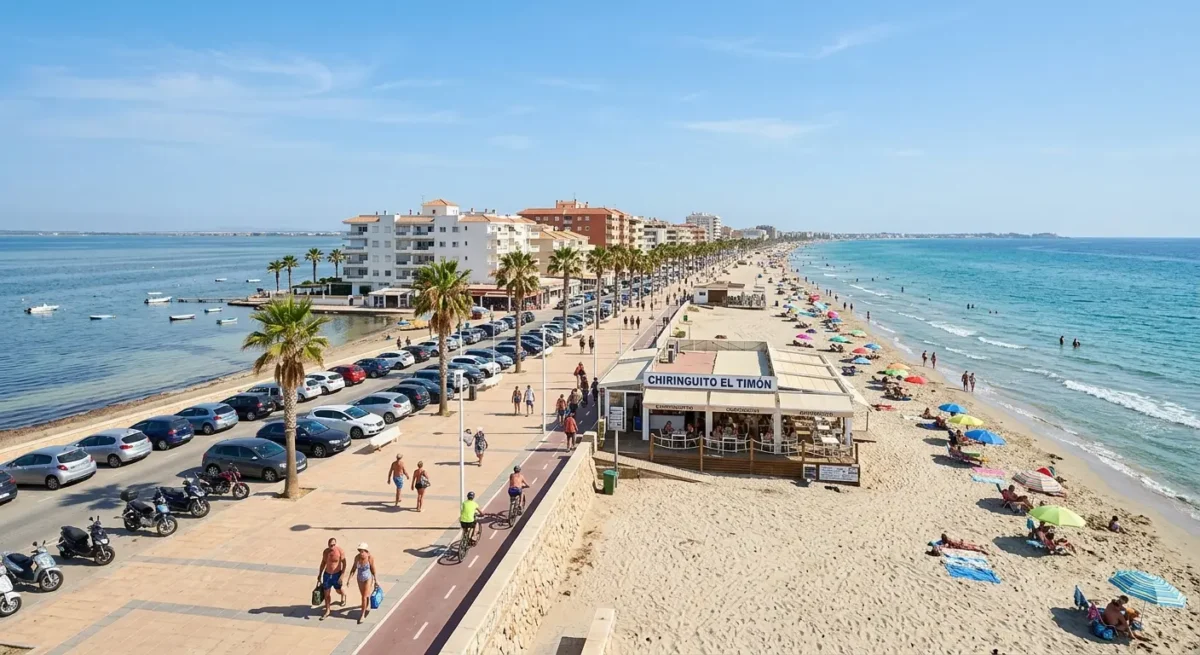
On a map, the strip looks simple because it is narrow, but daily walking depends much more on how far you need to go along it than how quickly you can reach either beach.
La Manga has a long, linear layout. That matters more than people expect. When you first look at it, it seems straightforward because the Mar Menor is on one side and the Mediterranean is on the other, so almost everything appears close to water. In practice, though, being close to a beach is not the same as being close to the place you actually need to get to.
Crossing is easy. Going along is different.
In many parts of La Manga, crossing from your accommodation to one beach or the other is fairly easy. That is the part people often imagine when they think of it as walkable. Walking along the strip is another matter. Shops, cafés, supermarkets and apartment blocks are spread out in a line, and that line keeps going. A place that looks nearby on a phone screen can still mean a walk that feels longer than expected once you are on the pavement following the same main route.
This is why staying in one area of La Manga can work quite well on foot, while moving up and down it regularly is less simple. If your routine is local – beach, coffee, a small shop, an evening stroll – walking usually makes sense. If you are changing area often, meeting people in different zones, or relying on foot for all your daily trips, the distances start to feel more noticeable.
That difference between map logic and lived experience is important. La Manga is not hard to understand, but it is easy to underestimate. The map shows a narrow strip, which suggests convenience. Real life is more about repetition, distance along one main corridor, and how willing you are to keep doing that walk day after day.
What walking distances feel realistic day to day
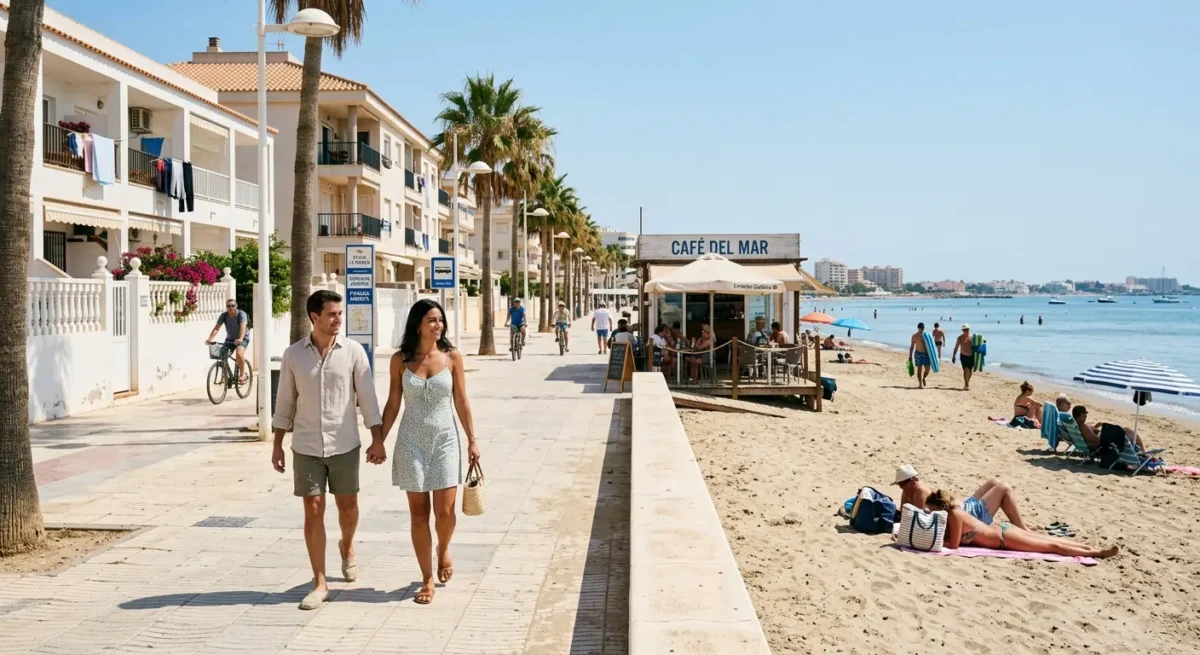
For many people, short local walks are easy enough, but once the same route gets longer and has to be repeated several times a day, it starts to feel more like effort than convenience.
In day-to-day terms, the most practical walking in La Manga is usually the local kind. Getting to the beach, walking to a café, picking up a few things from a small shop, or going out for an evening stroll often works well. That is especially true if you stay somewhere with a few useful places nearby and you are not trying to cover too much of the strip in one go.
Medium walks are where it becomes more mixed. A walk that feels perfectly reasonable once, perhaps for lunch or to reach a different beach area, can feel more tedious if you do it again later the same day, and then again the next morning. La Manga is simple to walk in the sense that you are mostly following the same route, but that also means the distance can feel more noticeable through repetition.
When walking stops feeling useful
Longer daily walks are where many people start to feel the limits. If you are carrying beach things, bringing back shopping, walking with children, or just trying to do all your daily trips on foot, what looked manageable on a map can become tiring quite quickly. That does not mean it is impossible. It means it is often less convenient than people expect before they arrive.
Comfort also varies a lot. Age, fitness, shade, and how often you are repeating the walk all make a difference. So does the type of day you are having. A relaxed walk with nothing to carry is one thing. The same route in sandals, with bags, after the beach, is another.
What people usually walk to in La Manga
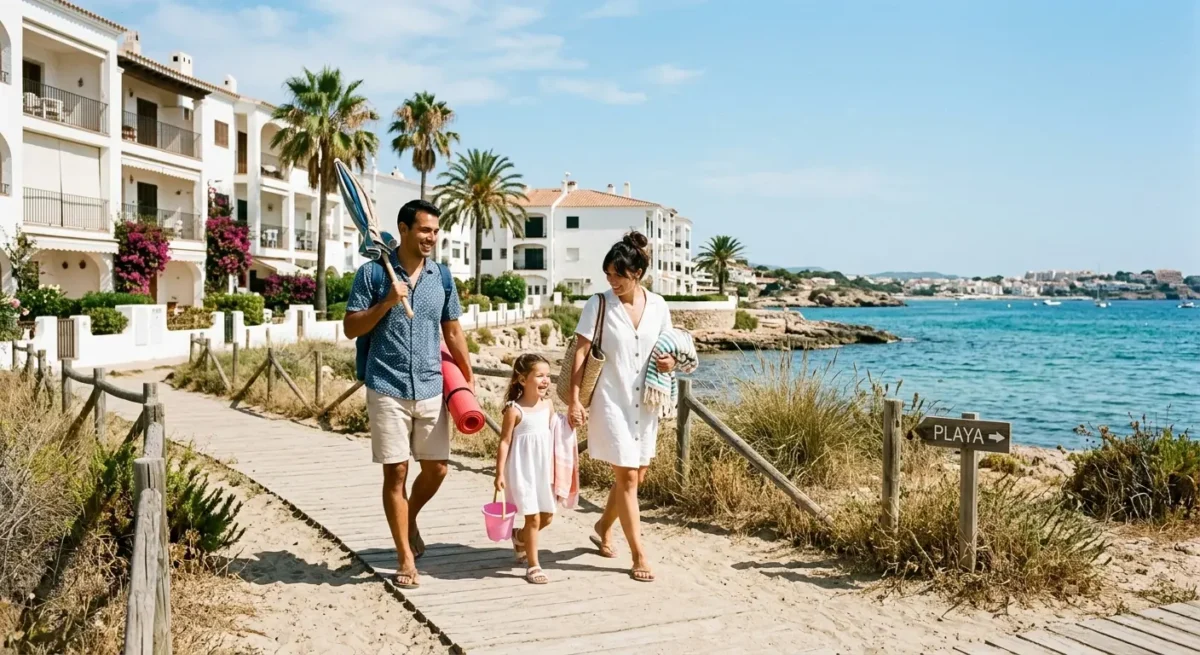
In normal daily life, walking is most useful for short local trips rather than moving up and down the whole strip.
For most people, the main thing they walk to is the beach. If your accommodation is reasonably close to either the Mar Menor side or the Mediterranean side, walking there is usually straightforward and makes sense as part of the day. That is one of the easier parts of being on foot in La Manga. The limitation is that beach access may be simple while other useful places are not, so being near the sea does not automatically mean everything else is close as well.
Walking also suits nearby cafés, restaurants, and small errands. That might mean going out for coffee, picking up bread or water, or walking to dinner without needing the car. This works best when you are staying in a section with a few everyday places around you. Some parts of La Manga feel more practical for this than others, and some stretches are much more limited, especially once you are relying on whatever is within easy reach on foot.
Evening walks are often the easiest part
One thing many people do enjoy on foot is the evening walk. Where there is a promenade or a pleasant seafront stretch, it can be one of the more comfortable ways to move around a little without feeling that you are doing a serious journey. In summer, this tends to be more appealing later in the day once the heat drops. In the cooler months, it can still be pleasant, but wind can change that quickly and make even a short walk feel less inviting.
In practice, walking works best when your routine stays local to one part of La Manga. If most of your day is beach, food, a few small jobs, and a walk in the evening, being on foot can work well enough. If you expect to keep crossing into different sections for meals, shopping, or meeting people, walking starts to feel less useful. That is usually the point where La Manga feels long rather than convenient.
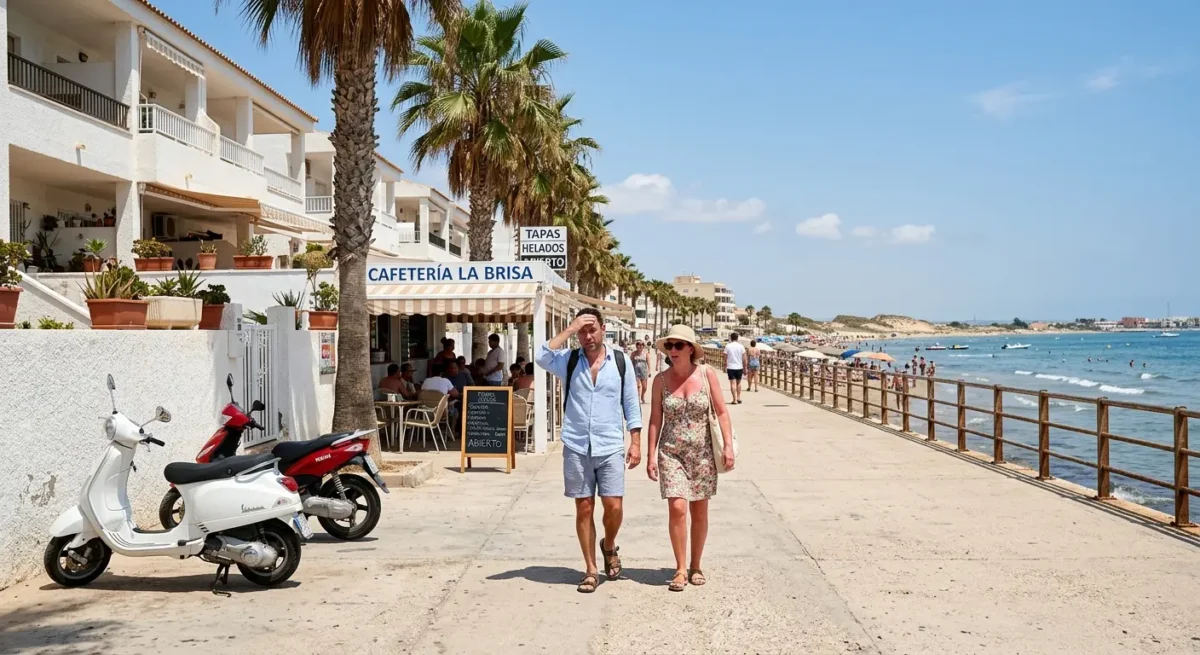
When the weather changes the answer
A walk that seems reasonable on paper can feel very different once heat, shade, and wind come into it
Weather makes a big difference to how walkable La Manga feels. In summer, even ordinary daytime walks can feel harder than expected, especially if you are doing them more than once a day. A route to the beach, a café, or a supermarket may not look far, but after ten or fifteen minutes in the heat it can start to feel like effort rather than a simple walk.
Heat matters more where there is little shade
Some parts of La Manga have limited shade, particularly on more open stretches. That changes the experience a lot. A walk that would feel fine in cooler weather can become uncomfortable when the sun is strong and there is nowhere much to break it up. If you are carrying beach things, shopping, or walking with children, that effect is even more noticeable.
Wind is the other factor people sometimes underestimate. La Manga is narrow and exposed, so on breezier days longer walks can feel less pleasant than the distance suggests. It is not always a problem, but on open sections a headwind can make a fairly normal walk feel drawn out, and in cooler months it can take the comfort out of being outside quite quickly.
Winter and the off season are often better for walking comfort overall. Cooler temperatures can make short and medium walks much more manageable, and many people find this is when La Manga feels easiest on foot. Even then, windy days still matter, so the answer is not simply that walking is good in winter and bad in summer. It depends on the day, the stretch you are on, and how much walking you expect to do.

When walking is not enough on its own
Relying only on foot starts to break down when your daily trips are spread across different parts of La Manga.
The main limit is simple. La Manga is long. If you are moving between areas that look reasonably close on a map, the real walk can still take time and wear you down, especially if you are doing it more than once in a day. People who enjoy walking often manage this for a while, but it is different from saying that most of La Manga feels easy on foot.
Daily errands depend a lot on where you stay
Walking works better when your accommodation is near the places you actually use. That usually means your usual beach, somewhere to eat, and whatever small shop or supermarket becomes part of your routine. If those things are scattered, ordinary errands become less convenient. A simple day can start to involve several fairly dull walks rather than one pleasant one.
This matters even more for people with mobility limits, families with small children, or anyone carrying beach gear, shopping, or pushchairs. A route that feels manageable with just a phone and keys can feel quite different once you add bags, heat, wind, or repeated trips. In those cases, a walking-only routine can become frustrating quite quickly, even if the distances are not extreme.
For a longer stay, walking alone usually suits people who plan to stay local most days. If you expect to explore widely every day, eat in different sections, and keep crossing from one end of your area to another, it often stops feeling practical. That does not mean walking is useless here. It means it works best as part of the routine, not as the only way of getting everywhere.
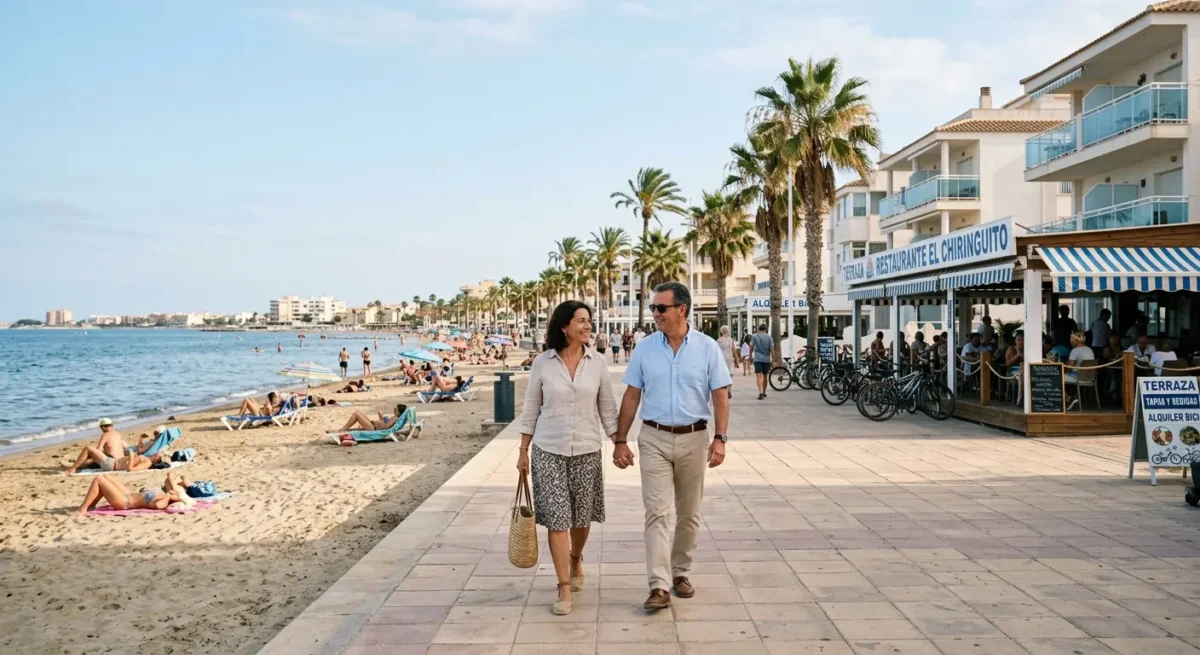
Who will find La Manga walkable enough
Whether it feels practical on foot mostly depends on how local you are happy to stay, and where you choose to stay.
La Manga usually works best for people who are content to keep most days fairly local. If your plan is to walk to the beach, go out for a coffee or a meal nearby, and take an evening walk without needing to cover much ground, it can suit you well. That kind of routine often feels straightforward, especially when your accommodation is close to the places you actually use.
Good for simple routines
It tends to suit people who want easy beach access more than people who want constant movement. If you like the idea of settling into one stretch of La Manga and using the same nearby cafes, promenade areas, and beach access points, walking can be enough for a lot of the day. For many visitors, that is the most realistic way to enjoy it on foot.
It can be less satisfying for people expecting a compact town where most places feel naturally connected by a short walk. La Manga is not really like that. Even when places look close on a map, they are not always places you will want to walk between repeatedly, especially in heat, wind, or with bags and beach things.
Where you stay matters
Choosing the right area often matters as much as simply liking to walk. Someone staying near their usual beach, food shops, and a few places to eat may find La Manga walkable enough. Someone staying in the wrong spot for their routine may find the same place awkward on foot quite quickly. So the honest answer is not just about distance. It is about whether your accommodation matches the way you want to spend your time.
Questions that need to be answered
What locals are talking
We often see the same misunderstanding repeated. People look at the map, assume La Manga will work like one compact seaside town, and then realise after a few days that their usual walks are fine but longer daily trips feel wearing. A common problem is planning the stay around map distance instead of checking the kilometre marker first, because that usually tells you more about how separated places really are.
My own judgement is simple. If you want to walk to the beach, to a café, and out in the evening, La Manga can work well enough in the right area. If you expect to cover most of it on foot day after day, it is not a very practical place for many people.
You might like these too
These sit in the same category as the one you are reading. They follow the same thread and offer a bit more depth. Have a look if you want to go further.