
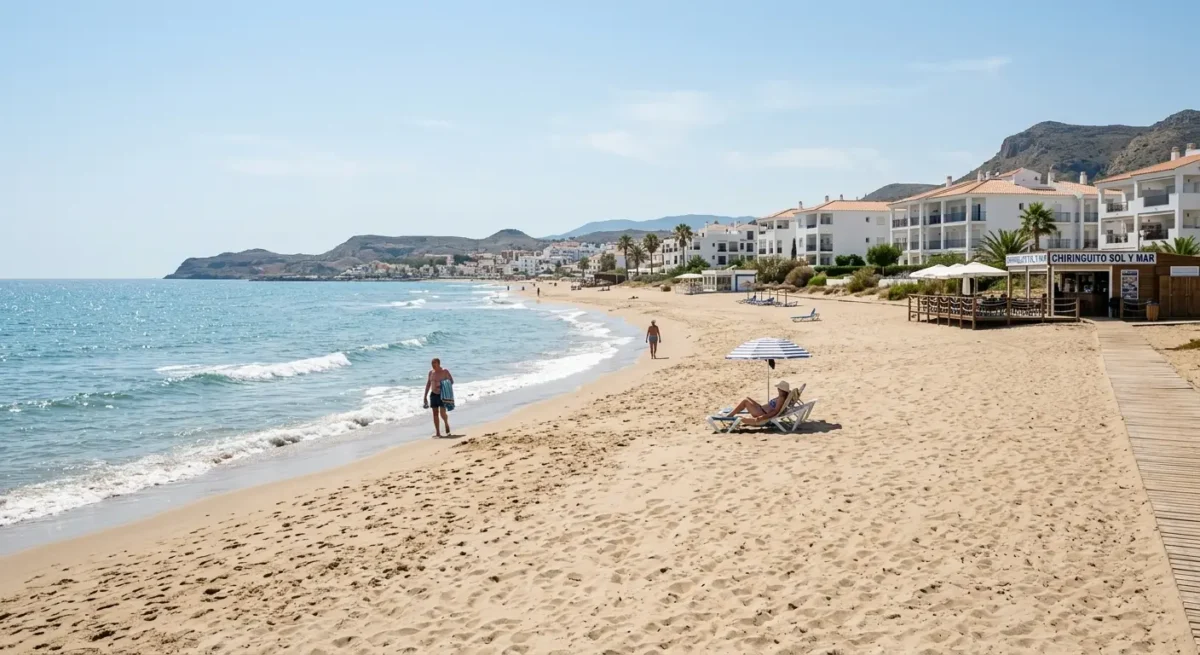
Are there quiet parts of La Manga
Yes, some parts of La Manga do feel quieter than others, but that is because La Manga is long and uneven rather than one place with a single character. In practice, “quiet” usually comes down to three things: how far you are from the busier centres, how densely built up an area feels, and the time of year. A stretch can be calmer without feeling cut off – you may still have basic services nearby – but it can also feel less convenient, especially outside summer. That balance matters more here than many people expect.
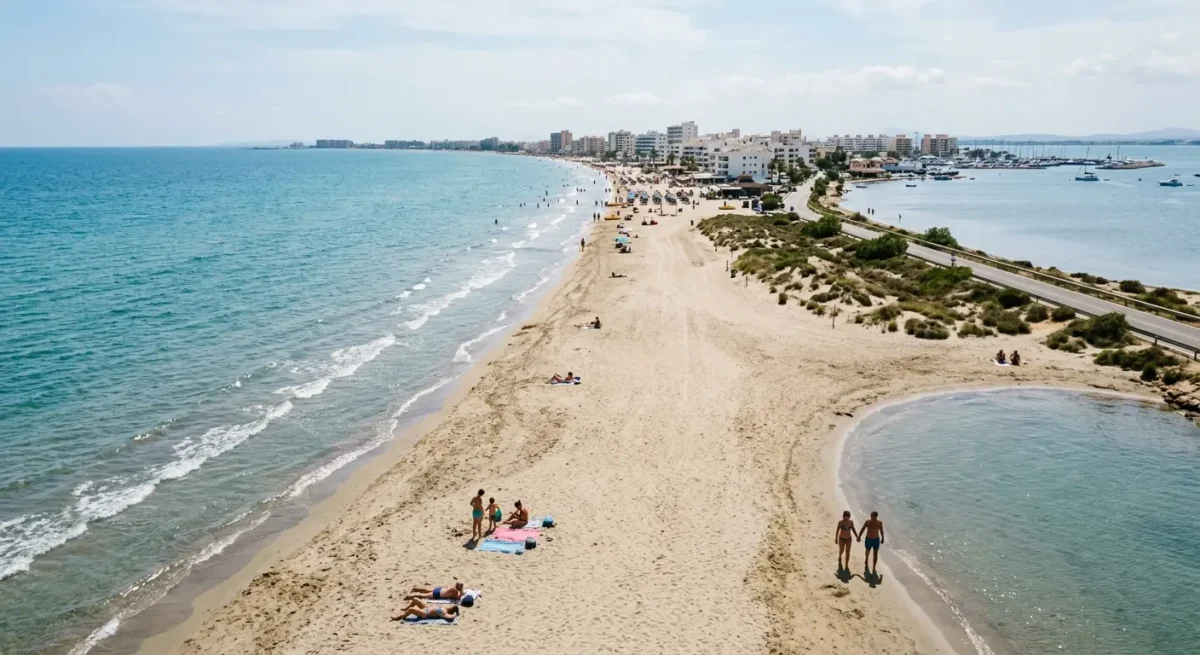
La Manga is long, narrow and not the same all the way through
The main thing to understand is that your day-to-day experience changes quite a lot depending on which stretch of the strip you stay in.
La Manga is not a single resort area with one clear centre and one clear atmosphere. It is a long, narrow strip of land, so daily life varies from one part to another in a way that is easy to underestimate if you have not been here before. A place can feel lively, built-up and busy in one stretch, then noticeably calmer further along without you having travelled very far in absolute terms.
Why the mood changes
Some stretches have more apartment blocks, more movement, and more of that busy holiday feel. Others feel more spaced out and less active, especially once you are away from the more obvious centres of activity. That does not mean one end is always noisy and the other always peaceful. It means the character shifts along the strip, and it shifts again with the season.
That is why the question is not really answered by naming one single quiet area. Quiet in La Manga is usually about degree rather than a neat boundary on a map. One part may feel calm in the morning but busier later on. Another may seem fairly settled in summer yet almost too still for some people outside the main season.
In practical terms, it helps to think of La Manga as uneven rather than divided into simple categories. If you want a quieter stay, the better question is what kind of quiet you mean – less traffic, fewer people walking about, less dense building, or simply a place that feels less central. Those are not always the same thing here.

What makes one part of La Manga feel quiet
It usually comes down to how far you are from the busier stretches, how tightly things are built together, and what time of year you are here.
In practical terms, a quieter part of La Manga is usually one that sits further from the main centres and busiest strips. The further you are from the areas with the most shops, regular passing traffic and steady footfall, the more likely a place is to feel calmer day to day. Footfall simply means the number of people moving through an area on foot. That said, distance does not automatically mean silence. A place can be away from the busiest stretches and still have enough nearby services to feel usable rather than cut off.
Building density matters
Another big factor is building density, meaning how closely apartments, shops and roads are grouped together. Where buildings are packed in more tightly, an area often feels busier even when there is no single loud source of noise. There is simply more movement, more entrances and exits, more cars looking for space, and more people coming and going. Where the layout feels more spread out, the same stretch can seem quieter even if basic services are still nearby.
Season changes everything. In summer, even parts that feel fairly calm can become noticeably livelier because more people are staying here, driving, walking and using bars and restaurants into the evening. Outside the main season, the same area may feel much quieter, sometimes to the point that it seems almost too still if you want atmosphere around you. This is one of the main reasons broad statements about quiet parts can be misleading in La Manga.
It also helps to think about quiet as more than just noise. Traffic, footfall and evening activity all shape how a place feels. A stretch may be calm in the morning but less so later on, or quiet in winter but not especially quiet in August. So when people ask whether one part of La Manga is quiet, the honest answer is usually relative rather than absolute.
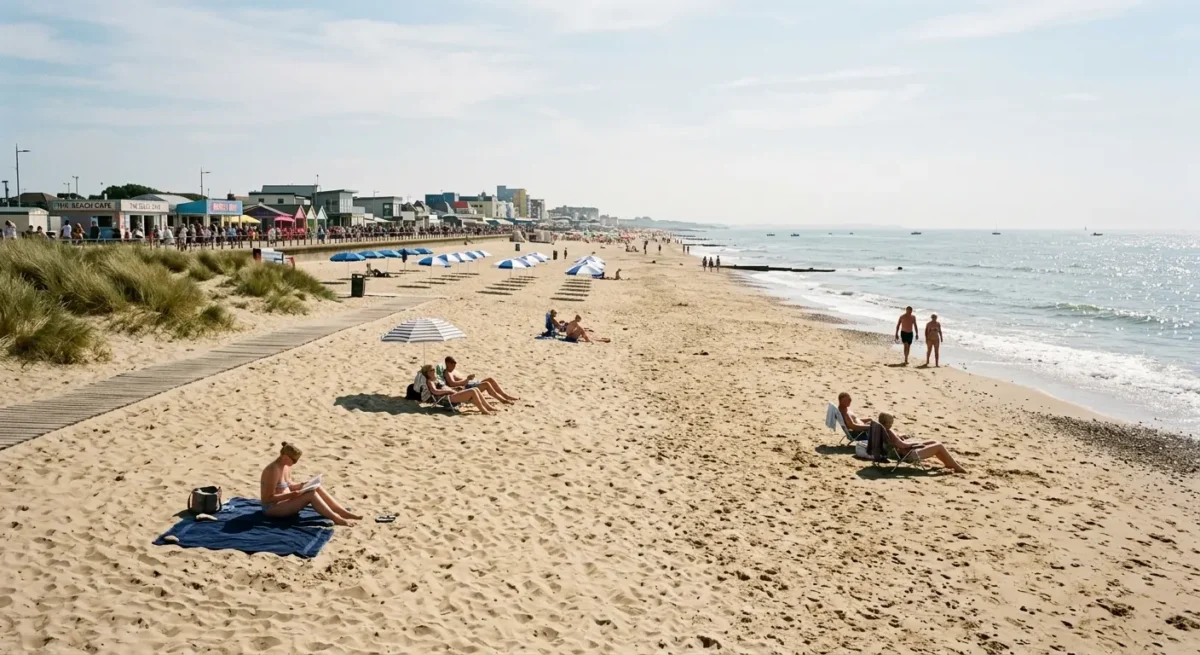
Quieter usually means further from the busiest centres
There is a broad pattern in La Manga, but it does not work like a neat line on a map.
In day to day terms, parts of La Manga that sit further from the main activity hubs often feel calmer. By activity hubs, I mean the stretches where you get more passing traffic, more people on foot, and a higher concentration of shops, bars and other everyday businesses. Once you are away from those busier areas, the general pace often drops.
That said, this is only a general pattern. One street can feel settled while the next feels more active, depending on the layout, nearby services, parking pressure and the time of year. So it is better to think in terms of tendency rather than certainty. Further away often feels quieter, but not every block follows the same rule.
The practical trade-off
Quieter surroundings can also mean a bit more travel for certain shops, restaurants or services. That does not necessarily mean you are isolated. In many parts of La Manga, you can still have the basics within reach. But if you want lots of choice close by, or you prefer to do most things on foot, a quieter stretch may feel less convenient.
Whether that trade-off works for you depends on what you want from the area. Some people are happy to be slightly removed from the busiest parts if it means a calmer feel. Others find that too much distance becomes inconvenient, especially outside summer when some places are less active. So yes, quieter often means further from the centres, but that should be taken as a useful guide, not an exact rule.
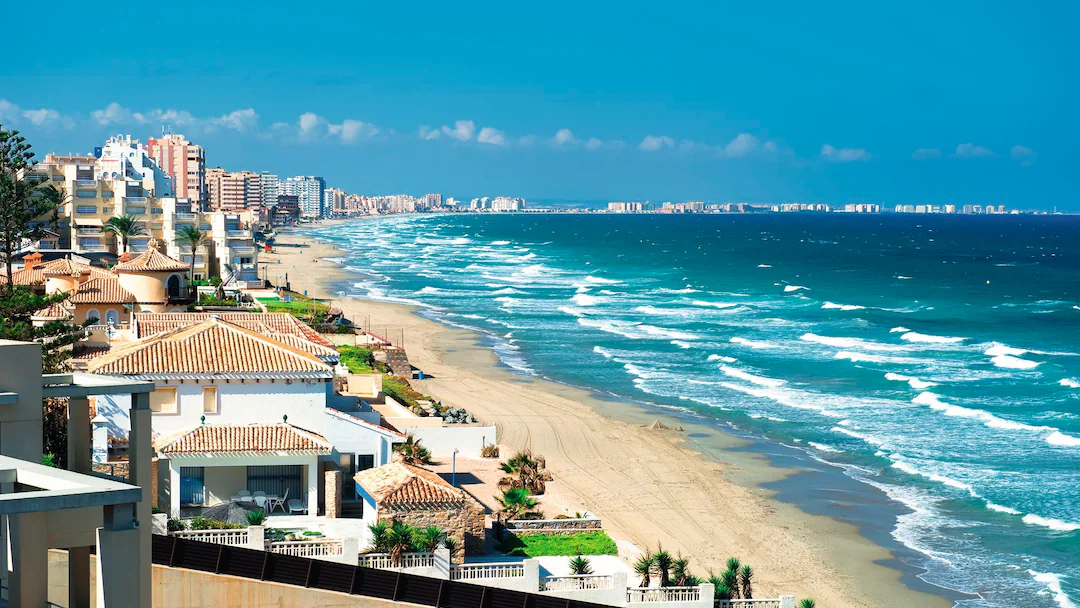
Building density changes the atmosphere
How closely buildings and day to day activity are packed together affects how busy a stretch feels.
In La Manga, density usually means how concentrated the buildings and activity are in one area. Where there are more homes close together, there is often more movement around them as well. You tend to notice more cars, more people coming and going, and more day to day noise from nearby businesses and shared spaces.
That does not make denser areas bad. In fact, they can work well if you want things closer at hand and a bit more life around you. But they do tend to feel busier, simply because more people are using the same stretch at the same time. Even when a road itself is not especially noisy, the overall pace can feel more active.
Where it feels more open
Less dense parts of La Manga often feel quieter because the buildings are more spread out and the space between active spots is greater. That can make the area seem calmer and more open, especially outside the busiest periods. In summer, that difference can narrow because seasonal traffic and occupancy rise across much of La Manga, but outside peak season the contrast is usually easier to notice.
This is one reason quiet does not automatically mean cut off from services. A stretch can feel calmer simply because development is less concentrated, while still having basic places within reasonable reach. As with most things in La Manga, it is better to think in degrees. Lower density often feels quieter, but quiet here is relative, not absolute.
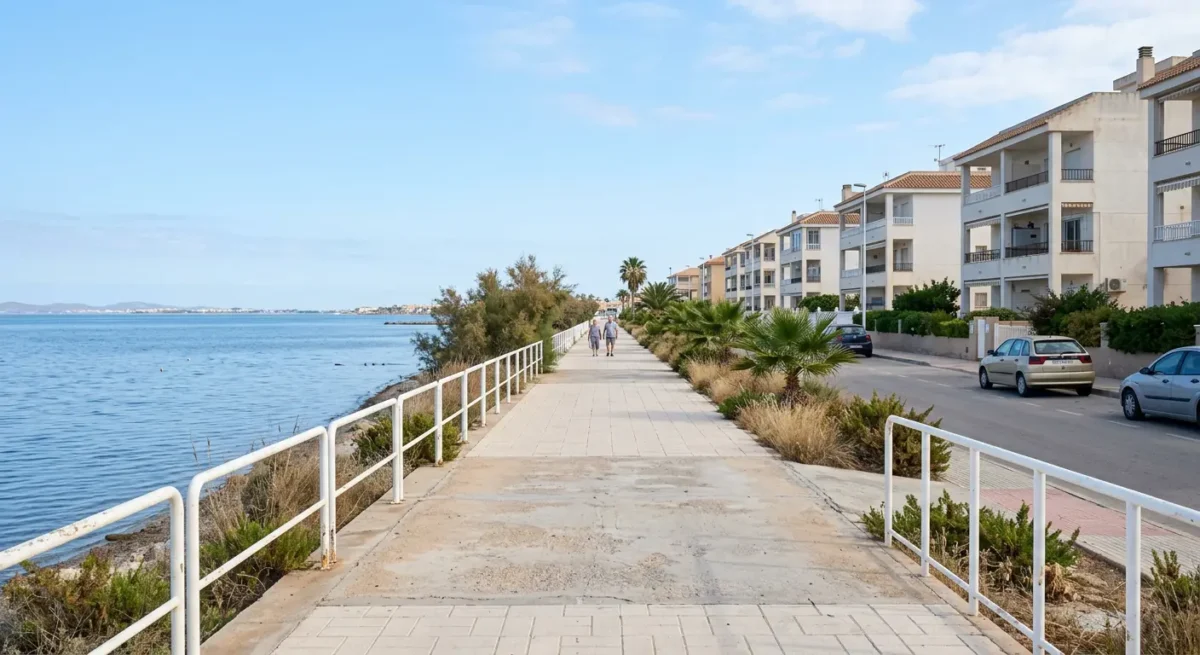
Summer and off season can feel like two different places
The same stretch can feel fairly lively in one part of the year and much calmer in another, which matters when you are deciding whether it suits you.
Season changes the feel of La Manga more than many first time visitors expect. In summer, even parts that are usually thought of as quieter can feel livelier simply because La Manga as a whole fills up. More homes are occupied, more people are moving around, and traffic, parking pressure and general background noise tend to spread further than they do at quieter times of year.
Outside the main season
Once you are outside the busiest period, many areas become much calmer and some feel noticeably emptier. That can be a real advantage if you want less noise, more space and a slower day to day atmosphere. But it also changes how the place works in practice, because occupancy drops, the weather matters more, and the overall rhythm becomes quieter across much of the strip.
This is where personal preference matters. A stretch that feels pleasantly quiet to one person may feel too still to someone else, especially in winter or the shoulder season, meaning the periods between the busiest months. If you like having plenty going on around you, a calm area can start to feel flat once there are fewer people about.
It is also worth remembering that quieter does not automatically mean you lose access to basic services. In some parts you can still manage day to day needs reasonably well, even when the area feels subdued. But if you want a place that feels consistently active all year, La Manga may not match that expectation. Quiet here is relative, not absolute.
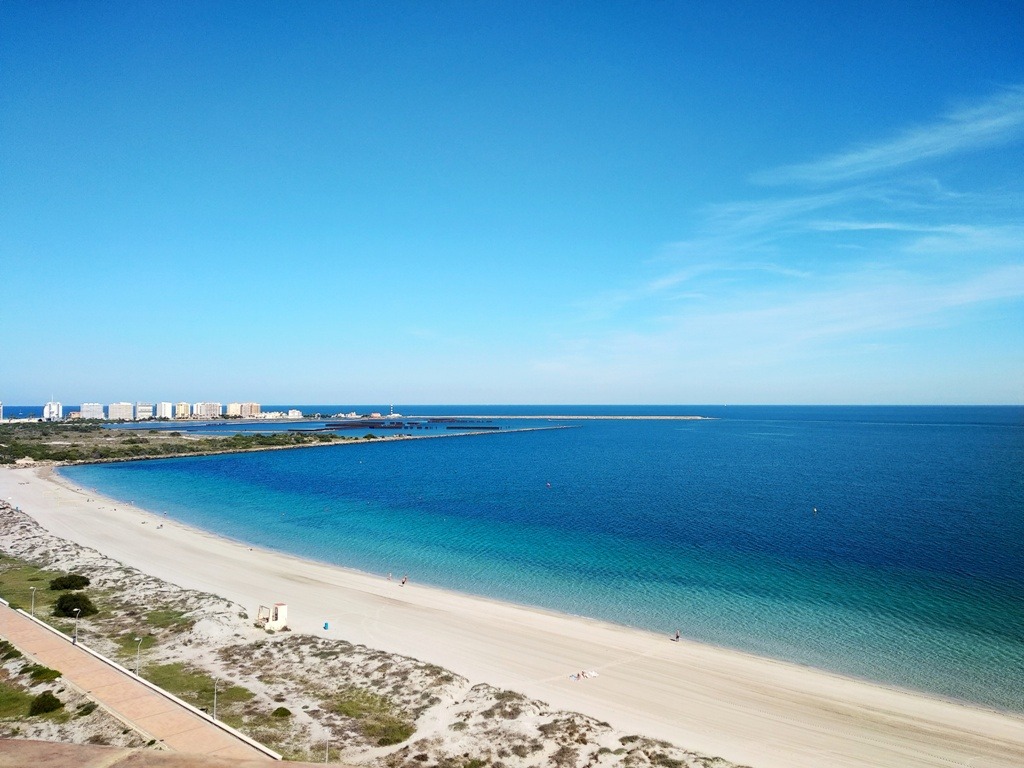
Quiet does not mean cut off from services
A calmer stretch can still work for everyday basics, but how easy it feels depends on where you are and what time of year it is.
One common assumption is that the quieter parts of La Manga must be isolated. That is not necessarily true. A place can feel calmer simply because there are fewer buildings, less passing traffic, or more distance from the busiest centres, while still leaving you within reasonable reach of basic day to day services.
Convenience changes by stretch and season
The practical side is less simple. Basic services may still be reachable, but convenience varies a lot by exact location and by season. In summer, more places tend to be operating and the area usually feels easier to use without much planning. Outside the main season, some stretches can feel much quieter in a good way, but also less convenient from one week to the next.
That is why it helps to think about what you need nearby on a normal day, not just on holiday. For example, ask yourself whether you want to be able to walk to a shop, pick up essentials without using the car, or have a few practical services within easy reach. If your day to day needs are simple, a quieter area may suit you well. If you want everything close at hand all year, some parts of La Manga can feel less straightforward.
So yes, there are quieter parts, and they are not automatically cut off. But quiet and convenience do not line up in exactly the same way everywhere. In La Manga, it is usually better to think in terms of degrees rather than absolutes. Quiet is relative, not absolute.
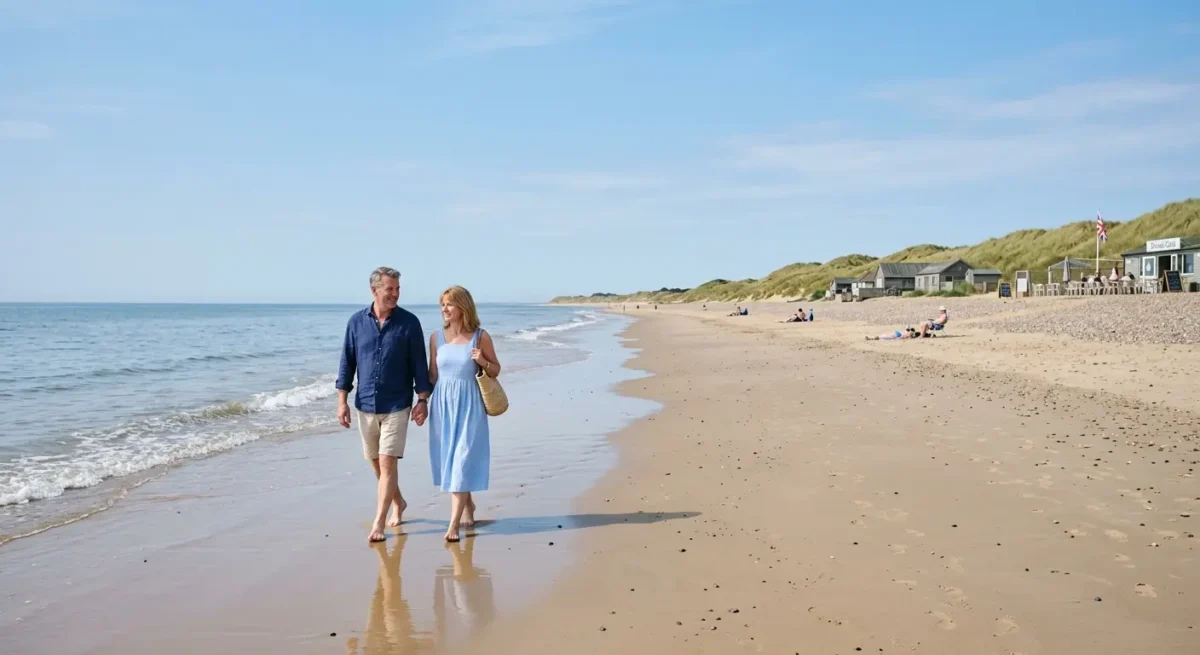
Who will like the quieter parts, and who may not
This is mostly about matching the area to the kind of daily atmosphere you want.
The quieter stretches of La Manga often suit people who want less noise, less foot traffic and a slower feel overall. If you prefer not to have busy pavements, late evening activity under the window or a constant holiday atmosphere, those areas can feel more comfortable. In day to day terms, they often give you more sense of space and less background pressure.
When quieter can feel too quiet
They may not suit you as well if you want lots of choice within a short walk, or if a lively evening atmosphere matters to you. Some people want to step outside and have several places nearby without thinking about it. Others want a bit more movement around them at night so the area feels active rather than still. In the calmer parts of La Manga, that is not always what you get, especially outside summer.
A lot depends on your own tolerance for noise, walking and quiet. One person may find a ten or fifteen minute walk normal, while another will see that as inconvenient for everyday use. In the same way, what feels pleasantly peaceful to one person can feel flat or too subdued to someone else. That is why it helps to think less about whether an area is objectively good or bad, and more about how you actually like to live or spend your time.
So the quieter parts can work well for some people and not especially well for others. Neither preference is better. It depends on whether you value calm more than immediate choice, and how much activity you want around you from one season to the next. In La Manga, quiet is relative, not absolute.

How to judge quiet in a practical way before choosing where to stay
Think about your normal day, not just the general reputation of an area.
A simple way to judge quiet in La Manga is to start with the places you expect to use regularly. That usually means a shop, somewhere to eat or have coffee, the beach access you are most likely to use, and any everyday services that matter to you. If those places are farther away than you would comfortably walk once or twice a day, the area may feel less convenient than it first seems, even if the surroundings are calm.
Look at the immediate stretch
It also helps to look at how built-up the immediate area appears rather than relying on broad descriptions of a whole zone. La Manga is long and uneven, so two nearby stretches can feel quite different. One part may have more apartment blocks close together, more traffic passing through and more movement on the pavement, while another may feel more open and subdued. In practice, quiet often comes down to what is directly around you, not what the wider area is called.
Match it to the season
You also need to judge it in the season when you plan to visit or stay. A place that feels fairly peaceful in autumn or winter can feel much busier in summer, simply because more people are using the same streets, beaches and services. The reverse is true as well. An area that feels pleasantly calm in the main season may feel too still for some people outside it. Quiet in La Manga changes a lot with the time of year.
So before choosing where to stay, keep the test simple. Ask yourself what you want within easy reach, look closely at how dense or open the immediate surroundings seem, and judge it in the season that actually matters to you. That gives a more useful answer than any broad label, because in La Manga quiet is relative, not absolute.
Questions that need to be answered
What locals are talking
We often see the same expectation gap. People hear that one part of La Manga is quiet and assume that means silence, empty beaches and no movement around them. A common problem is judging an area from a summer map search instead of checking what is open and how busy it feels in the season they actually plan to come.
My own view is simple. If you want a calmer base and can accept that quiet here usually means less noise and less density rather than complete stillness, some parts of La Manga can suit you well. If you want consistently peaceful surroundings in an absolute sense, La Manga may not be the right fit.